KITCHEN METHODS
From pan
to plate
A cook’s guide to the textures that distinguish five Sicilian dishes on the Avenue U menu.
Getting a sauce to cling
Lift a forkful of pasta alla Norma and look at the curve of each piece. A light coating of tomato stays with the pasta, carrying a little sauce all the way from the plate to the fork. That simple detail explains why the last moments of cooking matter. When hot pasta meets sauce, the surface starch and a small amount of its cooking water help the two come together. Tossing moves the sauce across the whole surface while the pasta still has some bite.
Eggplant adds a second texture to Norma. Its flesh softens with cooking until it gives gently under a fork. Pieces large enough to hold their shape give you a choice with each mouthful. You can taste the tomato on its own or pick up a piece of eggplant alongside it. Ricotta salata brings salt and a firmer texture than fresh ricotta. A little against the warm vegetables makes the sweetness of the eggplant easier to pick out.
When fennel meets sardines
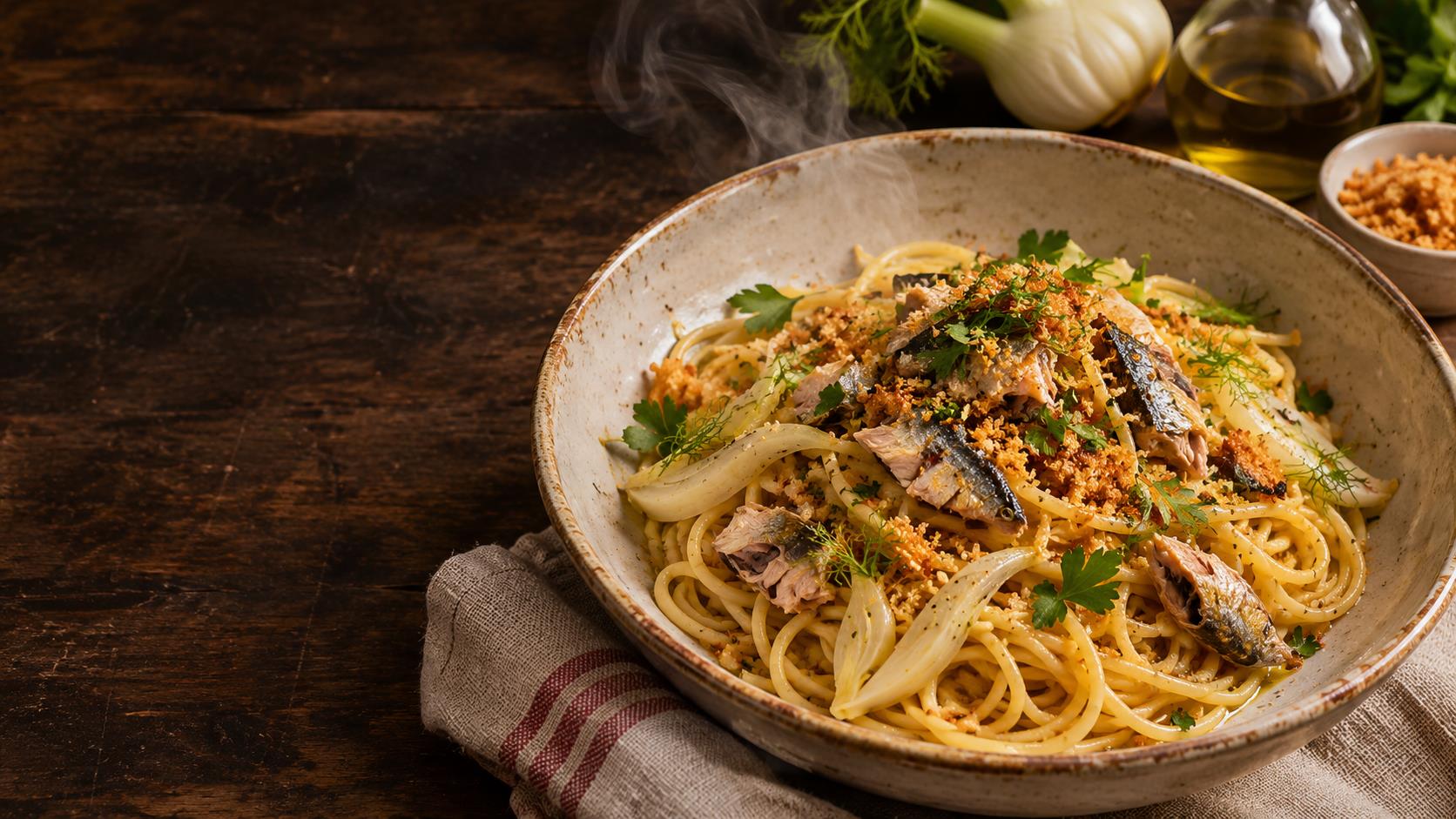
In pasta con le sarde, decide what to follow first with your nose and then with your fork. Wild fennel is aromatic enough to notice before you take a bite. Sardines have a stronger presence once you start to chew. With pasta between them, the two flavors stretch across a mouthful. A sauce like this is a good example of how a few distinctive ingredients can give a plate its entire character.
Compare that with linguine dressed in squid ink. Ink gives the sauce its dark color, and the long strands carry the dressing as you turn them around a fork. The color can be the first thing a guest remembers, but the shape matters just as much. Take up only a few strands at once and the sauce stays gathered with them. If you are choosing a seafood dish for the table, the octopus and calamari salad provides a different experience, with pieces of seafood to lift individually.
The edge of a panella
A panella begins with chickpea flour. In the traditional method, flour and water are stirred over heat until the mixture thickens enough to hold a shape. Spread thinly and allowed to set, it can be cut into pieces. At this stage the edges are smooth and the surface looks quite plain. Frying is what turns the outside into the fine, crisp layer that gives a stack of panelle its particular appeal.
Thickness makes a real difference here. A thin fritter gives you plenty of edge in proportion to its tender center. Stack several inside bread and the edges bend a little, leaving layers you can still feel when you bite down. Choose the panelle plate if you like to taste each fritter on its own. Choose the roll if you enjoy the way warm chickpea and soft bread come together, especially toward the middle of the sandwich.
Under a golden crust
Arancini and potato croquettes may arrive at the same table, yet cutting one open tells you immediately which is which. An arancino is built around rice. The grains hold together inside the shell while keeping a texture of their own. In a potato croquette, the center is softer and more uniform. The crisp exterior gives way in one motion to the potato underneath. Try a small piece of each while the contrast between shell and filling is easiest to feel.
Bread changes the balance again. In a potato croquette roll, the crumb of the roll catches the soft potato and the browned surface gives the sandwich a distinct middle layer. If you are picking up fried dishes, it helps to think about when you intend to eat them. Steam from hot food collects in a closed container and gradually softens the outside. A short trip from the counter to the table gives those textures their best chance to come through.
Eggplant, sweet and sour
In caponata, the term agrodolce describes a sweet-and-sour balance. Think of it as a dressing you taste in stages. First comes a little brightness, then the softer flavor of the vegetables, then a sweetness that lingers. Eggplant gives the dish enough substance to stand up to all three. A small forkful between bites of a meatball hero can be particularly good because the acidity cuts through the richness of the sandwich.
A stuffed artichoke offers another way to see how a vegetable can shape a whole dish. The spaces between its leaves catch seasoned breadcrumbs. As you work inward, you move from firmer outer leaves toward tender ones and finally the heart. Take a little filling with each leaf and leave the fibrous part behind. For someone ordering it for the first time, the pleasure is partly in that changing texture and partly in having a starter that takes its time.